Choosing Your Fishing Reel Globally: Basics and Environmental Considerations
Whether it’s the massive Atlantic Salmon along the North American coastlines, the Pike-perch in European inland waters, the Grouper in Australian tropics, or the Giant Catfish in Southeast Asian freshwaters, selecting the right fishing reel is the critical first step to success. This guide focuses on the most common spinning fishing reels to help you get started.
Spinning Reel Basics: What is an Angled Spool?
For beginners, choosing a spinning fishing reel with an angled spool design is crucial.
The angled spool significantly reduces resistance when the line exits during casting, meaning you can cast further and enjoy a smoother experience. Conversely, if the spool is deep and straight, the casting distance will be greatly reduced, which severely impacts your fishing experience. Some excellent products from REeffun also feature this series, and they all come standard with this spool design optimized for casting distance.
Budget Breakdown: How to Select Your First High-Performance Spinning Fishing Reel?
We divide fishing reels into three tiers based on budget, focusing on Weight, Drag power, and Smoothness, to help you find the best fishing reels.
Beginner Entry Level($30 - $80 USD)
- For beginners new to fishing, buying a bundled "beginner combo" of rod and reel is a fast and economical way to start. It allows you to quickly own a complete, usable set of equipment.
- Although the overall combo is cost-effective, you must be wary of the quality of the fishing reel inside the set. Many reels in cheap beginner combos are of questionable quality and may severely impact your casting and retrieval experience.
- If you decide to buy a beginner combo or a separate domestic spinning reel, ensure the accompanying reel must have an Angled Spool design. Reels without an angled spool (i.e., deep spools) will result in very short casting distances and a terrible experience.
Mid-Tier Upgrade ($100 - $150 USD)
- In this range, reels start incorporating more lightweight materials and waterproofing technologies (like mag-sealed waterproofing); one-piece handles are also more common. At this price point, you will find many high-performance spinning fishing reels that are well-balanced in drag, line capacity, and weight.
- You will clearly feel the improved comfort during long fishing sessions due to the reduced weight, and the enhanced reliability of the drag system, which is better suited for fighting mid-sized fish species.
Premium Flagship ($150+ USD)
- The fishing reels at this price are the "technology showcases" of major brands, featuring the most advanced tight-line winding technology (like slow oscillation) and top-tier lightweight design. Models like the C2500 can keep the weight around 155 grams; they are branded as high-aesthetic, durable, and extremely smooth.
- If the budget allows, buying a flagship product often saves you the trouble of upgrading for a long time. Although expensive, the ultimate smoothness and reliable performance give you more confidence when battling large fish.
Practical Tips, Common Pitfalls, and Sharing Guidance
Common Pitfall: Wobble and Hand Shake
Some spinning fishing reels may exhibit a noticeable "hand shake" or wobble during use, especially when retrieving the line. This is often related to the internal structural design and can affect the fishing feel, potentially leading to fatigue with long-term use. When selecting, you should check user feedback and try to avoid models with this issue. For instance, certain brand series have been reported by anglers to have retrieval wobble problems.
Pro Tip: Tight Line Winding and Smoothness
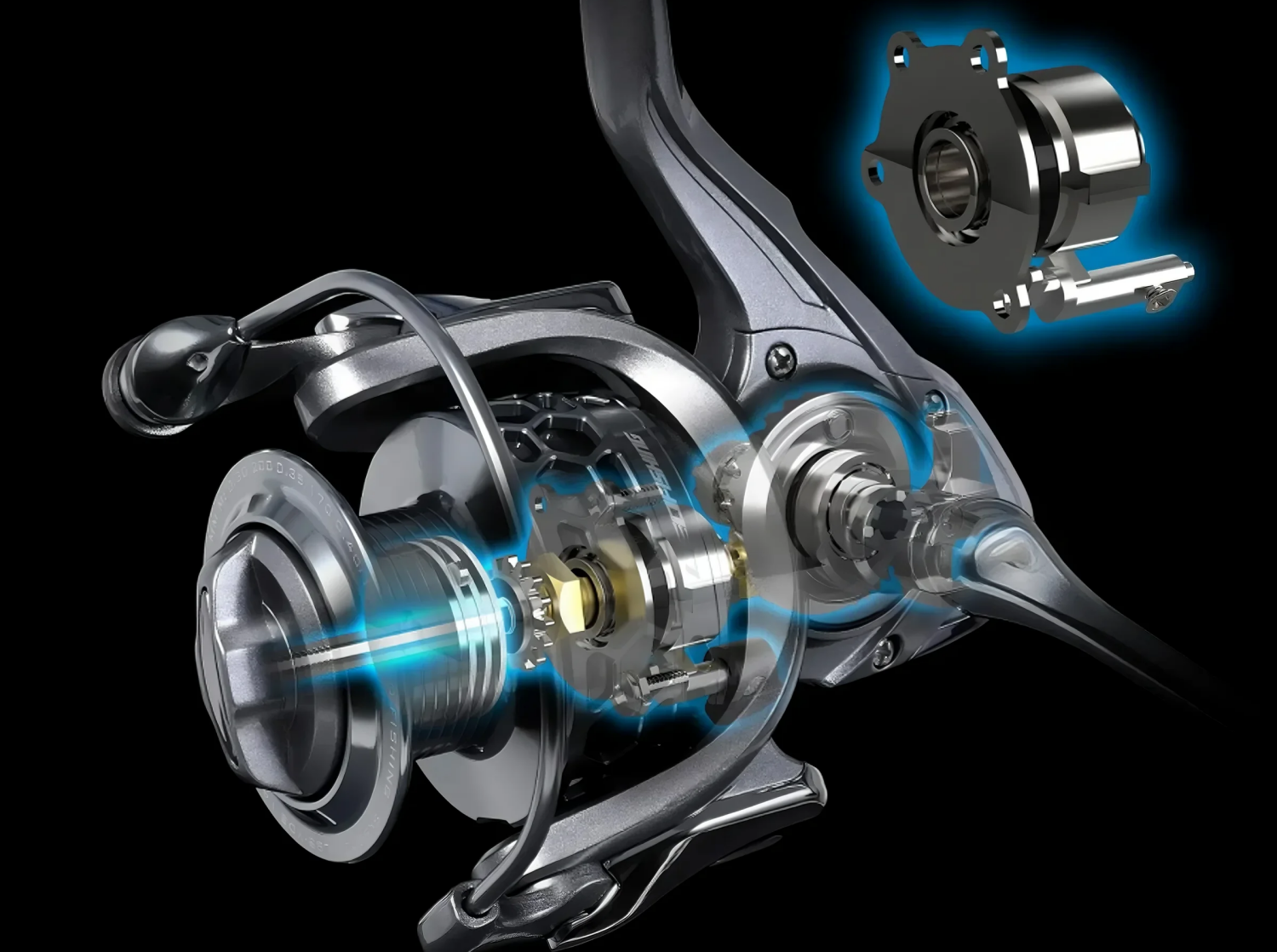
Pay attention to the speed of the line roller's up and down movement. High-end fishing reels often use tight-line winding technology, meaning the line roller moves slowly, making the line lay tighter and more organized. This tight line lay further improves casting performance and reduces the risk of line tangle, which is one of the standards for measuring the best fishing reels. You will often find that high-end Japanese reels exhibit superior smoothness.
Trade-off: Lightweight vs. Durability
Ultra-lightweight fishing reels (like certain high-end lightweight series), while feeling excellent, are not suitable for battling exceptionally large fish (such as heavy saltwater bass or tuna). If your primary target is giant species, prioritize models that are robust, have higher drag power, and greater line capacity; sacrificing a bit of lightweight design is worthwhile.
External Link Reference
- https://www.fisheries.noaa.gov/
- https://www.afma.gov.au/
Final Summary and Sharing
Selecting a fishing reel is not complicated. The key is to weigh the three major factors—angled spool, weight, and smoothness—based on your main target species, fishing environment, and budget. Remember, the most expensive reel may not be what you need, but a suitable reel can make a world of difference to your fishing experience. Start with a usable reel that has an angled spool, and gradually upgrade; you will then understand why the top-tier reels are worth their price.
If you found this fishing guide helpful, please Like, Save it, and Share it with your fellow anglers! Wish everyone a great catch!