Conquering Global Waters: Why the Right Fish Line is the Foundation of Success?
Whether you're chasing Largemouth Bass in North American lakes, challenging Pike in European rivers, or hunting Giant Snakehead and Culter Alburnus in Southeast Asian waters, lure fishing demands extremely high performance from your fish line. Among all gear, the line (especially PE and leader material) is perhaps the easiest place to make a mistake, yet it is the most critical component.
Combining practical experience targeting Bass, Mandarin Fish, and Alburnus, we will deeply analyze the selection methodology for PE line (best braided fishing line) and Fluorocarbon line (leader).
Decoding the Main Power: PE Line (Best Braided Fishing Line) – The Philosophy of Premium vs. Budget
In lure fishing, PE line (braided line) is the main line of choice due to its zero stretch and high tensile strength. However, the balance between diameter, strength, coating, and durability is key to selecting the best braided fishing line.
The Experience of Premium PE Line (Ultimate Stability and Performance)
For finesse fishing setups, pursuing ultimate stability is a must. In my personal experience, a certain brand's 12-carrier PE line performs excellently in terms of diameter, strength, softness, and durability. I typically use $0.6$ and $0.8$ size lines for my finesse rigs. Although the price is relatively high (about $1.1 \sim 1.2$ RMB per meter), its exceptional performance significantly improves hook-up rates and fish-control experience.
Pitfalls and Field Testing: The Impact of Dirt and Abrasion on PE Line
Even the best braided fishing line can encounter issues in real-world fishing. I once experienced frequent line breaks with a high-value PE line on a baitcasting setup. Initially, I suspected the line quality, but further investigation revealed:
- Guide Cleanliness is key: Dirty or worn rod guides significantly increase friction on the line, leading to line damage and breaks. After cleaning the guides, the line-breaking issue immediately ceased.
- Forcing Fish out of Snags: I successfully used this size $1.0$ line (without a leader) in a heavy snag area to forcefully pull out and land an $8$+ pound Alburnus at a distance of less than $20$ meters. This demonstrates that when facing Bass or Pike that try to dive into cover in North American or European waters, the abrasion resistance and explosive strength of a high-quality PE line are crucial.
Practical Tip: Even the best braided fishing line requires checking the guide cleanliness after heavy use. For high-value fish line, as long as the diameter is standard and it offers decent durability, it is suitable for use as a "daily driver."
Essential Leader Knowledge: Monofilament Fishing Line (Nylon) vs. Fluorocarbon
In lure fishing, the leader line is crucial for connecting the main line (PE) to the lure, and we usually choose between fluorocarbon or nylon line (monofilament fishing line).
Portability and the Near-Perfect Solution
For outdoor anglers, especially those needing lightweight gear to challenge remote fishing spots in Australia or Southeast Asia, the size of the leader spool is critical.
- Traditional Pain Point: Traditional fluorocarbon spools are usually large and inconvenient to carry.
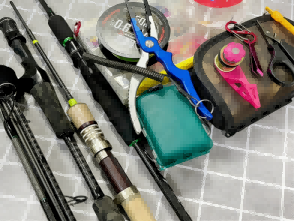
- Ideal Solution: Today, some fluorocarbon products with very small spools are available on the market. Not only are they convenient to carry and space-saving, but they also incorporate designs like an elastic band line lock. This design allows you to pull out only what you need, completely eliminating the worry of the line exploding or unraveling.
I personally love this design; it is nearly the perfect solution for the leader portability problem.
Summary
Whether choosing the best braided fishing line as the main line or selecting a compact, portable fluorocarbon for the leader, remember that the most expensive line is not necessarily the best—the line that is most suitable for your fishing environment and target species is king.
Further Reading: For more information on lure fishing techniques and fish conservation, you can refer to the following resources:
- NOAA Fisheries - Sustainable Fishing Practices
- Angling Trust, UK - Discussing Line Choices for Various Waters
If these practical experiences and gear suggestions have inspired you, please don't forget to share them with your fellow anglers!