1. The Fishing Line Big Three: Why PE Line is the Performance King for Lure Fishing? (H2)
Whether you are chasing large Sturgeon in North America, fighting Tuna on European coasts, or challenging Barramundi in Australia's freshwater areas, choosing the right line is the cornerstone of casting and fighting fish.
The mainstream Monofilament (Mono), Fluorocarbon (FC), and PE (Braided) lines can all be used for luring, but their performance varies significantly.
1.1 The Key Advantages of PE Line Over Mono and FC Lines
When we practice lure fishing, we rely primarily on casting and lure control. From these two core demands, PE line (often referred to as beyond braid fishing line) is the undisputed winner:
- Zero Stretch and Sensitivity: PE line has no stretch, making it the one with the best transmission (sensitivity). It can clearly transmit the state of the lure underwater, allowing for precise lure control. The farther you cast, the less favorable lines with high stretch are for control; the PE line allows for a more direct and effective hookset.
- Tensile Strength and Diameter: Under the same thickness, the tensile strength of PE line is far greater than that of Mono and FC lines. If you are looking for the strongest fishing line on the market, PE line is the answer. It provides sufficient pulling power while maintaining the thinnest diameter, allowing for longer casts, better water cutting, and less drag from the water.
1.2 Hardcore Comparison of the Three Line Types
| Feature | Braided Line | Fluorocarbon | Monofilament |
|---|---|---|---|
| Stretch | Zero Stretch | Less than Mono | Highest Stretch |
| Sensitivity | Best | Second | Worst |
| Pulling Power | Best | Second | Worst |
| Abrasion | Poor | Best | Second |
| Softness | Best | Stiffest | Second |
The Golden Combination: The Secret of PE Mainline + FC Leader
Despite the powerful performance of PE line, it has two fatal weaknesses: poor abrasion resistance and poor stealth (it has color). This is why you must use Fluorocarbon as a fishing leader line for a perfect complement.
Leader Line Function: The FC line connects to the end of the PE line, then to the lure. It uses its excellent abrasion resistance to handle underwater snags (like rocks, branches) and its virtually invisible properties underwater to increase fish confidence in the lure.
This "PE plus FC Leader" combination is recognized as the best choice in current lure fishing practices.
Essential for Beginners: PE Line Size Match Table for Practical Use
When choosing PE line size, never choose based on the size of Monofilament line, as the pulling power difference is huge! You must reasonably select based on your rod power and the target fish size.
3.1 Recommended Pairing of PE Line Size and Rod Power
| Target Fish/Technique | Rod Power | Recommended PE Line Size |
|---|---|---|
| Small Fish/Micro Lures (e.g., Minnows, Southeast Asian small fish) | UL (Ultra Light) | #0.4 - #0.6 |
| Medium Bass, Small Salmon (e.g., North American Trout) | ML (Medium Light) | #0.8 |
| Large Bass, Large Salmon, Small Tuna (e.g., European waters) | M (Medium) | #1.0 - #1.2 |
| Larger Predatory Fish (e.g., Zander/Pike-perch) | MH (Medium Heavy) | #1.2 - #2.0 |
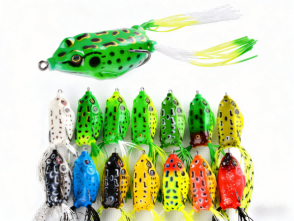
| Frog Lure Fishing (Weed/Obstacle Areas) (e.g., Snakehead/Heavy Cover) | H/XH (Heavy/Extra Heavy) | #3.0 - #5.0 |
3.2 Regarding PE Line Length and Braiding
- Line Length: In most cases, 100m of PE line is sufficient. If you are using a long-casting rod and need to cast far, 150m is also generally enough.
- Braiding (Strand Count): PE lines on the market come in 4-strand, 8-strand, 12-strand, and even 16-strand options. The higher the strand count, the denser and rounder the line is, but it can also be stiffer. Currently, 8-strand PE line is the mainstream choice, offering the best overall performance (tensile strength, softness, and smoothness). The softer and smoother the line is, the farther a spinning reel can cast, and the less likely a baitcasting reel is to backlash.
4. Beginner's Guide to Avoiding Pitfalls: Buy Right, Not Just Expensive!
4.1 Avoiding the PE Line "Size Trap"
We do not recommend buying very cheap PE lines that cost only a few dollars on the market.
Consequence of Low Price: They often "compensate for insufficient pulling power with thickness." The #0.6 line you buy might actually be as thick as a #2 line. This essentially takes up five sizes, leading to poor casting distance, bad water cutting, and insensitive transmission. The final result is: If you can't cast far enough, you can't reach the fish, and naturally, you can't catch them!
New anglers starting lure fishing do not need the most expensive line, but they should not buy the cheapest. When you lack experience and technique, your gear is the only boost you can get.
Conclusion
Now you are familiar with the characteristics of Mono, FC, and PE lines, and you've grasped the essence of the "PE Mainline + FC Leader" golden combination. Remember, the pitfalls of PE line have been cleared for you!
Did you find this article helpful for your line selection? Please share it with your fishing friends so they can avoid detours! Tight Lines!